
Spotlight on Damon Hughes: Gaining a New Identity
May is a big month in Indiana for sports fans — from NBA playoffs and the beginning of what will surely be a
red-hot WNBA season to, of course, that popular automobile race that takes place in Speedway. It’s also a big
month for Damon Hughes — who knows what it’s like to compete on the field.
But he’s celebrating the achievement of a different goal this month.
Hiding a Habit
“For most of my life I was an athlete,” Damon said. “It was something I really had a passion for — it kind of
became my identity at the time. I was good at it and enjoyed it, but it also gave me a sense of control and
purpose.” Damon never dreamed his passion for sports would lead him on a path to addiction.
During his senior year at Elwood Community High School, Damon was introduced to hydrocodone, an opioid
used to treat pain, by a friend on the football team. It didn’t take long for his occasional use to become a habit.
“By the end of my senior year, I had a scholarship to play Division III football and baseball at Earlham College,
but by that time, I was using every day. It was starting to control my daily routine,” he said.
Damon hid it most of his senior year, but using had become a habit, a way to deal with any type of pain along
with social anxiety and created a sense of confidence he hadn’t had before.
“I was a people pleaser and concerned about what people thought of me,” he said. “Using would knock those
walls down and give me a sense of courage. At first, I just took pills for the pain from playing football, but it
quickly progressed to using more often. And since my tolerance built up, I moved to other substances.”
Hydrocodone to oxycodone and then to morphine.
“You’re constantly chasing that feeling,” Hughes said. “It’s euphoric — a numbing of any fears and anxieties
you have; all your concerns are erased. It’s almost like a body and mind release. And when that feeling goes
away, you want it again … and again.”
A Lifestyle of Using
Damon went from being an honors student with a college scholarship to barely graduating high school in 2007.
Even though he lost his football scholarship, he still went to Earlham, but he had gotten so deep into using that
his passion for sports — something that used to be his identity — was gone.
“I got comfortable with the environment of partying and using,” Hughes said. “My discipline for sports and
school was slipping away, and I found this other lifestyle I thought I enjoyed more. It’s wild how many people
knew about pills … and how readily available they were. I would go home every weekend and bring enough
stuff back with me just to get through a week of school. That became my sole focus.”
After a semester at Earlham, Damon quit. He came back to Elwood, got a job, lived at home and fell back in
with people who were using. No goals, and no plans.
“I was arrested for the first time in 2008 for stealing and possession of a controlled substance,” he said. “I
ended up going to court and getting probation for 18 months. I went through the process, completed it and
thought, ‘That wasn’t so bad.’” So he continued on with his lifestyle of using. A lifestyle he maintained for a
decade.
In 2019, prescription opioids became harder to get, so Damon found heroin. Short-lived because the friends he
was spending time with weren’t using it, he transitioned to methamphetamine, which became a drug of
convenience for him and led him to his next arrest.
“Meth was one of those drugs I said I’d never touch,” Damon said. “I always thought those were the worst type
of drug users, and I had justified my use saying, ‘Well, at least I’m not using needles. At least I’m not doing
that.’ And now here I was.”
Deeper Into Addiction
Hughes went to jail in 2019, but since it was his first offense in 10 years, he was released. He was put on
probation again, but this time he was way deeper into addiction. He missed two probation appointments, got
rearrested and was put on house arrest, which he violated. And in the midst of the COVID-19 pandemic, court
dates were delayed and rescheduled, so it was two years later in 2021 before he was finally held in jail. And
this time he wasn’t getting out.
Prior to going to jail in 2021, Damon’s attorney had shared with him about Mockingbird Hill. He had put his
application in but wasn’t ready to commit. He wasn’t ready to admit he had a problem — or that he needed
help. But when he was finally stuck in jail with no way out, he had run out of options.
“I had avoided prison all this time,” Hughes said. “But now I was stuck and miserable, and I decided I didn’t
want to live this way anymore. I was referred to Problem Solving Court and then moved into Mockingbird Hill
on December 16.” Two days later, his mom passed away.
“I was scared to death going into Mockingbird Hill,” Damon said. “My life was a mess. It was chaotic, but it was
comfortable. I knew how to operate in the life I had created. Going to jail took all that away; I felt like I lost my
identity. And then on top of that, the last week I was in jail, my mom went into the ICU. I had caused her so
much grief and pain while she was alive, and I wanted her to see me clean. If I wasn’t at Mockingbird Hill when
she passed, I don’t know if I would have lived through that. Mockingbird Hill was everything I needed.”
Strength in Recovery
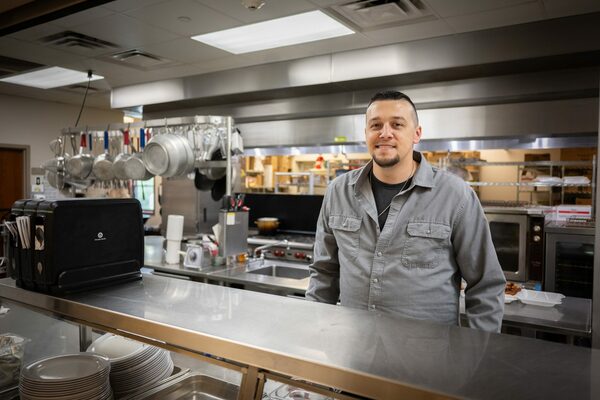
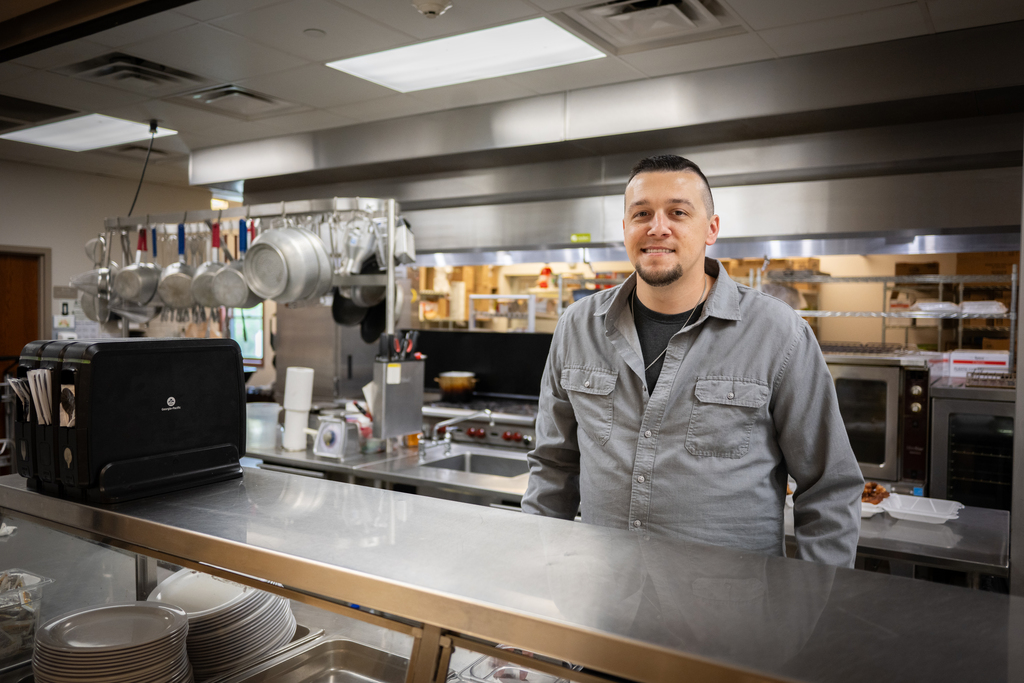
He graduated from Mockingbird Hill in February 2022, and knew it was a place he wanted to come back to and
give back to. He currently works in the kitchen, helping more than just the current residents who live there.
“This place has allowed me to really stay connected to my recovery,” Damon said. “It gives me an extra layer
of accountability. Working here is a constant reminder of what I went through just a short time ago and how
easily I could be right back there.”
This month, Hughes graduates from Madison County Problem Solving Court. And his journey over the past two
years has been one of the hardest of his life.
“Damon has put in so much hard work and effort since he agreed to Problem Solving Court,” said Mockingbird
Hill Director Katie Dalton. “He went to a recovery house, participated in several Aspire Outpatient services,
maintained employment, had to complete a service project, attended regular court hearings and complied with
random drug testing throughout the entirety of the program. He has accomplished so much and is such an
asset to our team.”
“At first, it’s a feeling of defeat and like you’re giving up, like you’ve lost your life,” Damon said. “But it has also
created a sense of pride and strength in me, knowing I don’t have to use every day, and that I can learn to
handle my emotions and be a stronger and better person. I wouldn’t have been as strong in my recovery
without Mockingbird Hill. I’m super grateful for this place.”
